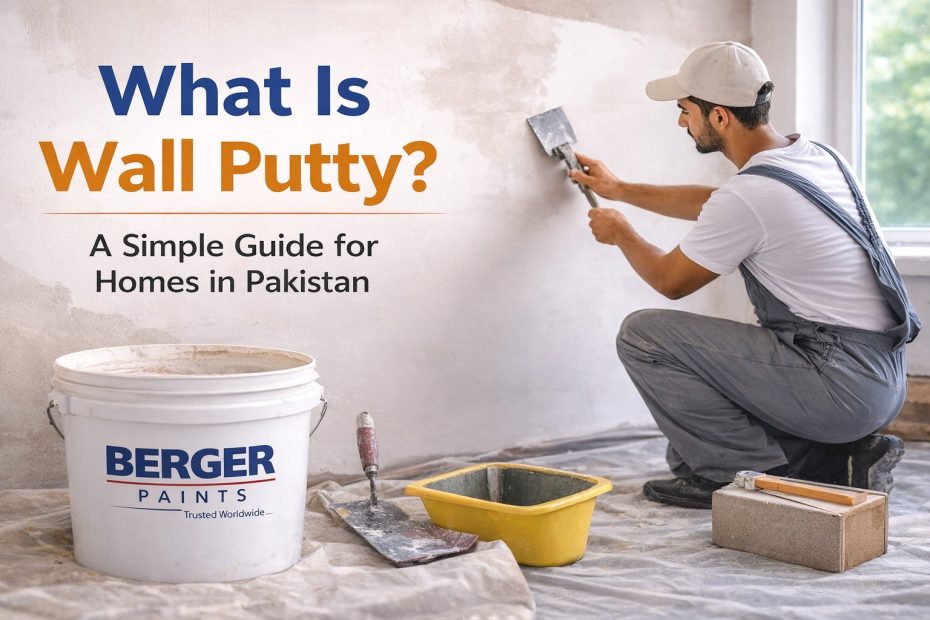
Wall putty is a surface preparation material used to make walls smooth before painting. It fills small cracks, pinholes, dents, and uneven plaster. When mixed with water, it becomes a soft paste that spreads on the wall. After drying, it forms a clean, level layer that helps paint look uniform and last longer.
In Pakistan, wall putty is common for new construction and repainting. It is especially useful because dust, humidity, and temperature changes can affect paint finish. A well puttied wall stays stronger and looks better over time. Wall putty is not paint. It is the base work that supports the paint. If the base is weak or rough, the final paint will never look premium, even if you use expensive paint.
Why Wall Putty Matters Before Painting?
Paint cannot hide real wall defects. It can only cover color, not surface problems. If the plaster is rough, paint will look patchy. If there are hairline cracks, paint may show them clearly. Wall putty fixes these issues and makes the wall ready for primer and paint.
Wall putty also improves paint grip. This reduces peeling, flaking, and bubbling later. It makes the wall less porous, so paint absorption becomes even. That often means fewer paint coats and better coverage. For Pakistani homes, this is important because many walls face moisture from bathrooms, kitchens, rainy seasons, or water seepage. While putty is not a full waterproofing solution, it still helps protect the surface and supports better paint performance.
Types of Wall Putty Used in Pakistan
Cement based wall putty is the most common type in Pakistan. It comes as a powder and is mixed with water. It is strong and works well for interior and exterior walls. It is a solid option for plastered walls and concrete surfaces.
Acrylic wall putty is usually ready to use and dries faster. It gives a smoother finish. It is mainly used on interior walls, especially when you want a fine finish under premium emulsions. Some putties include polymers that improve flexibility and reduce cracking. These are useful when walls have minor movement or when you want stronger bonding.
How to Apply Wall Putty?
Many people ask how to apply wall putty so the finish looks professional. The process is simple, but the details matter.
- Start by cleaning the wall. Remove dust, loose plaster, grease, and old peeling paint. A dirty wall leads to weak bonding.
- Lightly dampen the wall with clean water. Do not soak it. A slightly damp surface helps putty stick better.
- Mix the putty powder with clean water in a bucket. Stir until it becomes smooth and lump free. Keep the mix workable, not too thin.
- Apply the first coat using a putty blade or trowel. Spread it evenly with smooth strokes. Keep the coat thin. Thick layers can crack later.
- Let it dry fully. Then check the wall. If the surface still has dents or waves, apply a second thin coat.
- After the putty dries completely, sand it lightly to remove blade marks and high spots. Then clean the dust. Now the wall is ready for primer and paint.
How Much Wall Putty Required for One Room?
A very common question is how much wall putty required for one room. The exact quantity depends on your room size, wall condition, and how many coats you apply.
For a standard room around 10 by 12 feet with normal wall height, many people use around 3 to 6 bags of 20 kg putty for two coats. If the walls are rough or newly plastered, you may need more. If the walls are already smooth, you may need less.
Also remember that the ceiling is often ignored in calculations. If you plan to apply putty on the ceiling too, the required quantity increases. It is smart to buy a little extra. Running out of putty mid work creates shade differences and uneven finishing.
Key Benefits of Wall Putty
Wall putty improves the overall look of your paint. It creates a smooth surface that makes colors look cleaner and brighter. It helps paint last longer and reduces flaking.
- It also reduces paint absorption. This can lower paint cost because you may need fewer coats for the same coverage.
- It supports better durability in dusty environments. Walls become less powdery and easier to clean after painting.
Common Mistakes People Make
Many people apply putty on damp or weak plaster. That leads to peeling later. Fix seepage or dampness first.
- Some people apply one thick coat to save time. That often creates cracks. Thin coats with proper drying give better results.
- Skipping sanding is another mistake. Without sanding, the wall may look uneven under light and paint.
- Mixing too much putty at once is also a problem because it can harden and become unusable. Mix only what you can apply in a short time.
Note: For a smooth and long lasting finish, you can use Berger Wall Putty available at our store to prepare your walls perfectly before painting.
Frequently Asked Questions About Wall Putty
Can you paint walls without putty?
Yes, but the paint will not last as long and may show imperfections. Putty makes the paint look smoother and stronger.
Do you need primer before putty?
Primer is helpful but not always necessary. Some contractors apply putty first and then primer before painting. The main goal is to create a strong base for paint.
Can you use putty on wet walls?
No. Wait until the wall is dry or the putty will not stick properly.
Is wall putty necessary before painting?
Wall putty is not legally required, but it is strongly recommended if you want a smooth finish and long lasting paint. If your wall has cracks, rough plaster, or uneven texture, paint alone will not fix it. Putty creates a proper base, so paint looks premium and stays intact longer.
What is the difference between wall putty and primer?
Wall putty is used to level the surface by filling imperfections. Primer is used to seal the surface and improve paint bonding. Putty fixes the wall.
Can wall putty be applied on old painted walls?
Yes, but only after proper preparation. Loose paint must be removed. The surface should be sanded and cleaned. If the old paint is glossy, it must be roughened so putty can grip.
How long should wall putty dry before painting?
Drying depends on weather and thickness. In most Pakistani climates, a coat may feel dry in a few hours, but complete drying can take longer. A safe approach is to allow at least 6 to 8 hours between coats and at least 24 hours before primer and paint.
How many coats of wall putty are needed?
Most walls need two thin coats for a smooth finish. If the wall is already fairly smooth, one coat may be enough. If the wall is rough or new plaster, two coats are usually better.
Is wall putty waterproof?
Wall putty is not a full waterproofing solution. Cement based putty has better resistance than bare plaster, but it cannot stop serious seepage or leakage.
Can I apply wall putty myself or should I hire a painter?
You can apply it yourself for small rooms if you have basic tools and patience. The key is surface cleaning, correct mixing, thin coats, and sanding. For large houses or premium finish work, hiring an experienced painter is often worth it.
Wall putty is one of the most important steps in getting a clean, durable paint finish. It prepares the wall, improves paint bonding, and makes your room look modern and polished. If you understand what wall putty is, estimate how much wall putty required for one room, and follow the correct method of how to apply wall putty, you can get a strong finish that lasts for years in Pakistani home conditions.